
Complete Guide: Choosing the Right N2O Cylinder Size for Your Business (0.95L vs 3.3L)


For distributors and catering suppliers, choosing the right Nitrous Oxide (N2O) cylinder format is not just about gas capacity—it’s about optimizing logistics, improving workflow efficiency, and maximizing profit margins.
At Hongkong Zentarao Global Co., Ltd., we often get asked: "Should I stock the standard 0.95L cylinders or the larger 3.3L tanks?"
The answer depends on your target market and logistics strategy. In this guide, we break down the pros and cons of each size to help you make an informed wholesale purchasing decision.
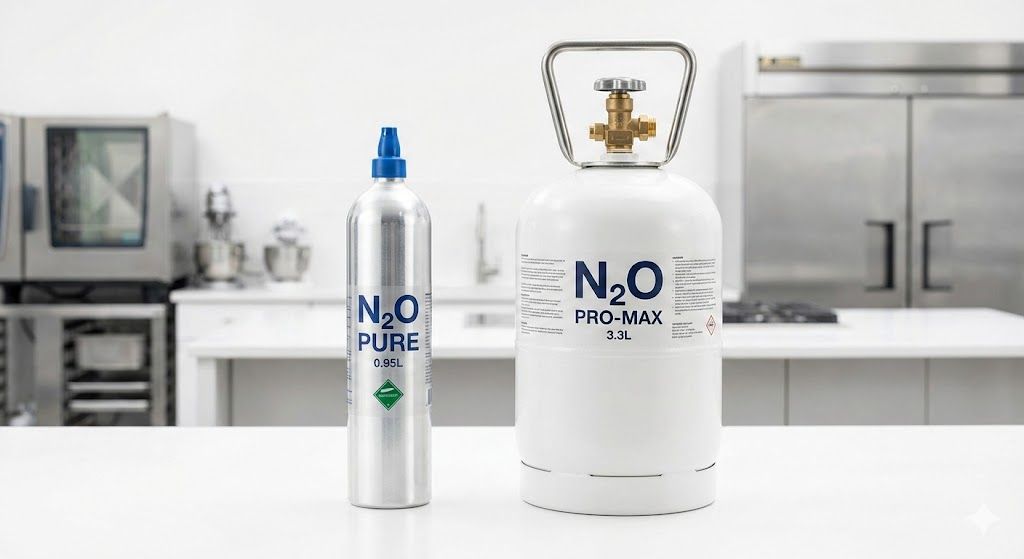
1. The Standard 0.95L Cylinder (580g/640g)
The 0.95L cylinder has become the global industry standard for a reason. It offers the perfect balance between portability and capacity.
- Best For: Mobile caterers, home baking enthusiasts, and small cafes.
- Key Advantage: Portability. It is lightweight and easy to handle without additional equipment.
- Wholesale Benefit: High turnover rate. These are fast-moving consumer goods (FMCG) in the catering world.
👉 View our 0.95L Cylinder Specifications:Products
2. The Commercial Powerhouse: 3.3L Tank (2000g)
The 3.3L tank is rapidly gaining popularity in high-volume commercial environments. It holds approximately 2000g of pure N2O, equivalent to over 250 traditional 8g chargers or three 0.95L cylinders.
- Best For: Large commercial kitchens, busy bars, and restaurant chains.
- Key Advantage: Efficiency. Using a 3.3L tank drastically reduces "downtime" spent swapping out empty cylinders during a busy service.
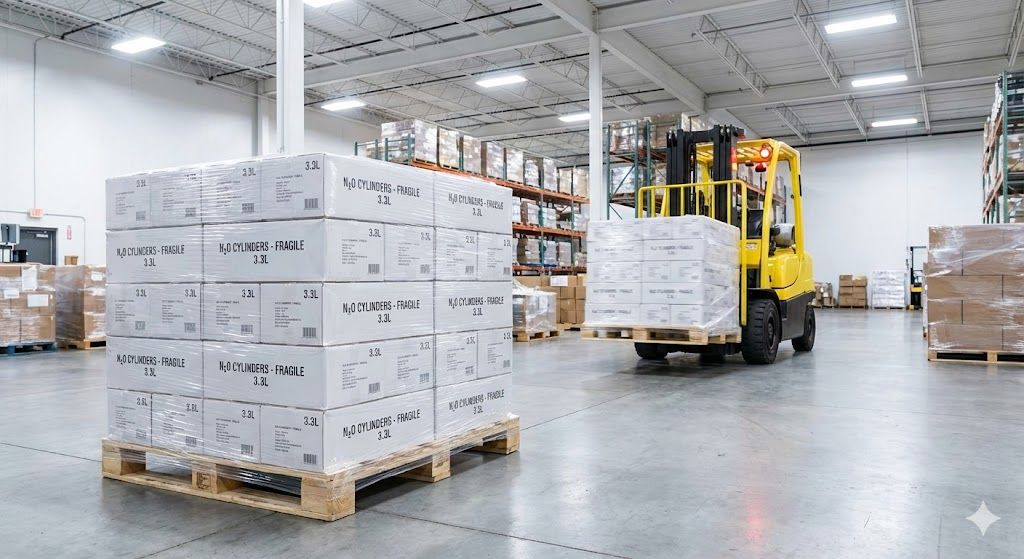
- Wholesale Benefit: Lower Shipping Cost Per Gram. Because you are shipping less steel and more gas per pallet, the logistics cost per unit of gas is often lower for 3.3L tanks compared to smaller cylinders.
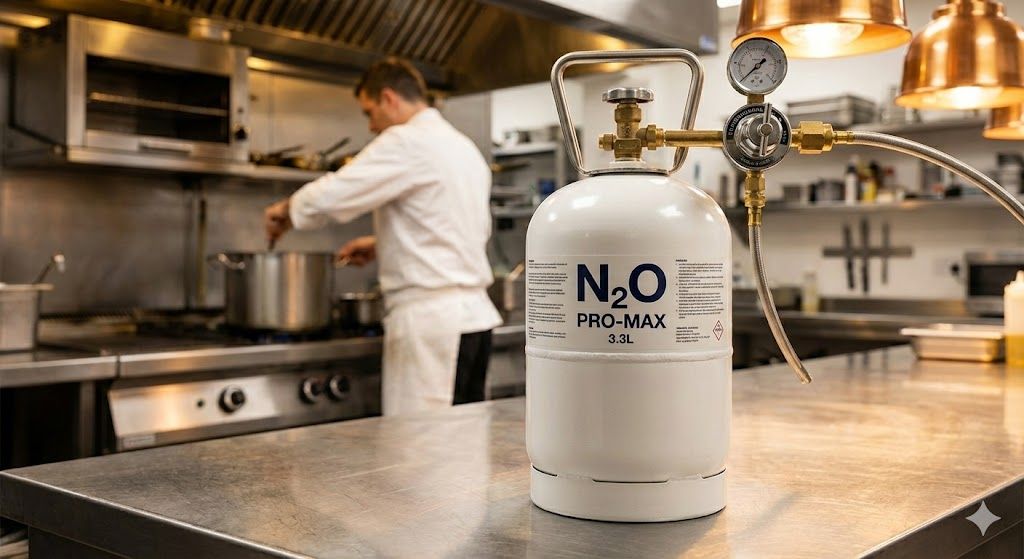
3.3L Tank in Commercial Use
3. Logistics & Profitability Analysis
For importers, shipping Dangerous Goods (Class 2.2) is a major cost factor.
- 0.95L Logistics: Easier to distribute to small retailers. A standard pallet can hold hundreds of units, making it ideal for B2C retail distribution.
- 3.3L Logistics: Ideal for B2B supply. The larger format means fewer units to handle and less packaging waste. For distributors selling directly to restaurants, the 3.3L tank offers a better profit margin due to reduced handling costs.
At Zentarao we optimize pallet loading for both sizes to ensure you get the most gas possible in a 20GP or 40HQ container.
4. Verdict: Which Should You Stock?
- Choose 0.95L if: Your customers are retailers, smoke shops, or home users who need portability.
- Choose 3.3L if: You supply commercial kitchens, festivals, or large-scale catering events where efficiency is king.
Most of our successful distributors stock a mix of both—using the 0.95L for volume retail sales and the 3.3L for high-value commercial clients.
(Conclusion & CTA)
Whether you need a pallet of 0.95L cylinders or a full container of mixed sizes, Shenzhen Gaslink provides factory-direct pricing and guaranteed food-grade purity (99.95%).